 Daniel Campbell-White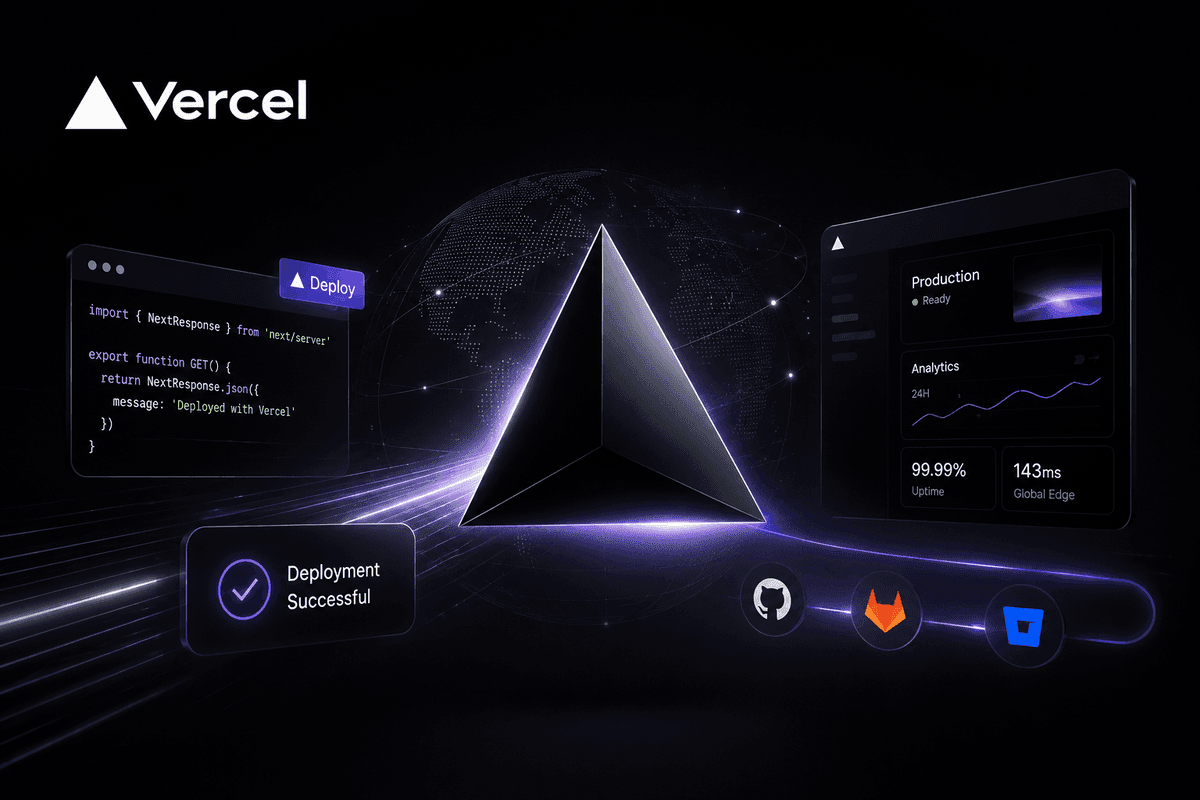
If you've been near web development lately you've probably heard the name Vercel thrown around a lot. A few years ago barely anyone outside the React crowd had heard of it. Now it's one of the go-to ways to get a modern site live. This very site runs on it, so let me explain what it is and why the fuss.
What it actually is
Vercel is a platform for hosting and deploying websites. "Deploying" just means taking the code a developer's written and getting it live on the internet - quickly, and without it falling over.
The thing that set it apart is that it's built by the same people behind Next.js, which is one of the most popular frameworks for building sites right now. Because the two are made by the same team, the whole thing just fits together. Less fiddling, fewer surprises.
Why developers like it
A handful of things, really:
- Push to deploy. Connect it to your code on GitHub and every change goes live automatically. No dragging files onto an FTP server like it's 2009.
- Preview links. This is the one that wins people over. Every change gets its own live URL before it goes to the real site, so you can check it, send it to a client, and get a yes or no without anything going public.
- It's fast everywhere. Your site's served from locations around the world, so it loads quickly whether the visitor's in Liverpool or Los Angeles.
- It mostly just works. Sensible defaults mean a lot of the painful setup disappears.
The first time you fire a preview link over to a client and they reply while they're literally looking at it, you get why people switched.
It's more than hosting now
Vercel started as somewhere to put your site, but it's grown into a fuller platform - little bits of back-end logic, built-in analytics and performance data, easy custom domains, even managed databases now. For a lot of projects it's become a one-stop shop.
What it means if it's your site
You don't need to care about any of the above, fair enough. So here's the bit that matters to you:
- Your site loads fast and stays up, which is good for customers and for Google.
- Changes can be checked and signed off before they go live - no nasty surprises.
- The setup that runs your small business site can scale up later without a rebuild.
- Costs are predictable. There's a genuinely free tier and the paid plans don't spring surprise bills on you.
The honest bit
It's not the right answer for everything. A plain static brochure site, or a tight budget, might point somewhere else, and that's fine. But for the kind of fast, modern sites I build, it's a really good default that makes life easier for everyone involved.
The wider point is that the tools we pick quietly shape how good - and how stress-free - the end result is. Choosing the right one is part of the job, and it's a big reason a well-built site just feels better to run.
Thinking about a new site, or not sure yours is on solid ground? Drop me a line and we'll have a chat.
Want this kind of thinking applied to your website?
Get in touch and let's talk about your goals.